
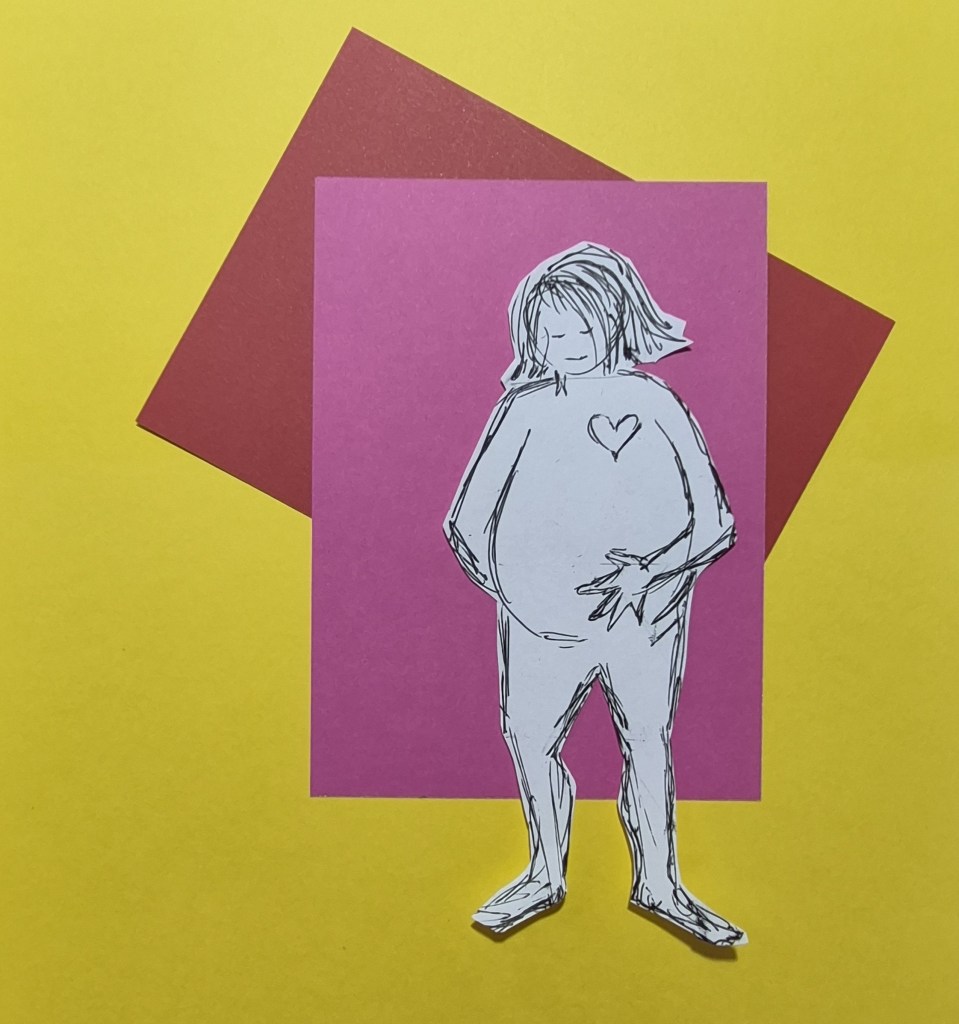
My stomach tried to be my protector
That sounds crazy. But hear me out.
In 2017 I had a surgery to relieve my persistent symptoms of acid reflux. The operation was to repair a hiatal hernia, which is when the upper part of the stomach bulges through the diaphragm into the chest cavity. Turns out I had an unusually large hernia. Afterwards, in the recovery room, my surgeon told me, “Your stomach was 80% up in your chest. It took up so much room in your chest that it repressed the function of your left lung. You have asthma as a result. Also, you have fatty liver disease due to obesity.”
Stunned by his words, my first thought was “my stomach was protecting my heart!”
I didn’t say it out loud. Of course I had no proof of that declaration. It was simply an intuitive assertion that popped unbidden into my mind. God, was that you? Maybe it was a spiritual reality, maybe a physical one. It might not make sense to most people, but I FELT an unassailable certainty that it was somehow true.
My stomach tried to protect my heart.
I’ll try to connect the dots here.
I started to use food to stop my feelings when I was about nine years old, when life at home was very difficult for me. I discovered that when I was upset and I ate something (whether my body was truly hungry or not) I felt better. Food was an available resource I learned to use to soothe overwhelming emotions so well that I didn’t even register I was having those emotions. My school pictures chronicled my weight gain through my childhood years.
And as an adult, overeating food continued to be a “default-setting” reaction to stress. My weight, and my relationship to food, has always been an ongoing battle. I didn’t like my body size, but when others would ask me, “why don’t you just eat less?” I had no answer. I felt a compulsion that continued no matter how I analyzed myself, no matter how many books I read instructing me how to eat, what to eat, how much to eat. Diets and will-power made me thinner for a while, over and over and over, but I couldn’t sustain them. I returned to the same pattern of behavior I couldn’t find a way to stop. Like millions of other repeat dieters.
I ate food the same way an alcoholic drinks alcohol. It wasn’t rational. “Normal” eaters are likely baffled here.
At the time of that surgery, I had been around 60 pounds overweight (down 20 pounds at the time from my previous highest weight). I had been “in the food” again, habitually using food to comfort myself as I always had. I was pretty much always aware on some level that I used food in inappropriate, unhealthy ways, but I tried not to think about it most of the time. I ate compulsively, addictively, particularly sugary foods which I had long acknowledged represented an addiction for me, but I wasn’t a “moderate eater” in any category of food.
It took me some time to get past the initial shock of my doctor’s diagnosis—my stomach had climbed up into my chest cavity, landing on top of my left lung—which was positioned over my heart—I began thinking about what this information meant in the context of my history of sexual abuse and emotional neglect, that began when I was a preschooler, and throughout my childhood. I had a dire need for protection from forces bigger than me.
Even adults with good resources and emotional management skills get overwhelmed sometimes. But a child whose family actively contributes to the traumatic experience that was harming her, and teaching her not to protest or reveal the secret– hasn’t been taught healthy emotional management skills. I was in deep trouble. I couldn’t see any action that would fix the problem. And I was a little kid.
The scary feelings told me it was a house-on-fire level of emergency. But nobody around me seemed bothered.
So, by trial and error, I taught myself a way to mute the alarms going off in my head, in my emotions. “Switch off the sirens, honey—just EAT, and the noise goes quiet,” said a voice in my head. And then I could refocus on something that felt better—I could escape into reading a book, maybe. I could become one of the characters. Much easier.
So, I asked my stomach to take the hit that my emotions couldn’t manage. I asked my stomach to process unreasonable amounts of food, that it wasn’t really hungry for on a biological level (the fuel tank was already full). That role I unwittingly assigned my stomach was to take over feelings management, through the strategy of numbing out what I couldn’t fix.
Because my heart was overrun. And an emotional meltdown would have created its own dangers—my freaking out would have brought on some kind of punitive response (yelling, banishment to my room, ridicule, spanking—for some of us a level of physical violence never aimed at me. Prayers for them.)
So, necessity was the mother of invention. It was a little kid’s crude, immature invention, to stop my feelings, or blunt or numb or hide the feelings that threatened to undo me.
I know now that feelings are part of God’s design to neurologically signal for a need for change out of a scary situation—to prompt “fight or flight” from danger. But I didn’t understand that at the time. I couldn’t fight, and where could I flee to?
My stomach was employed for a task not in its job description. But instead of saying, “Hey, I wasn’t designed for that, ask somebody else”, my stomach took it on and did the best it could, even though the skill-set was a “big stretch”. Metaphorically and literally.
I am telling this story because it’s not just me who experienced conflict or chaos or deprivation of some degree. Millions of us grew up in unsupportive or damaging or impoverished environments. And I’m certain that most of the folks creating those circumstances were doing the best they could, within systems that were impossibly difficult, acting out their own pain or anger, and unaware of the consequences. For every one of us, the ways we survived were the best we could come up with. We’re all in need of a little respect and forgiveness for doing what we could manage to do in a crisis. Especially when we were kids. We didn’t know it would turn into a permanent life strategy.
By processing whatever I compulsively ate, my stomach succeeded at shutting off warning signal that kept shouting at me to “GET OUT!” And once the alarm went quiet, this course of action caused my body, serendipitously, to take on a shape that, I noticed somewhere along the way, made me less appealing to a would-be predator. I realized a dominant message our culture, and the rude comments on TV and within my earshot, were that girls who were fat weren’t “wanted”. I so desperately wanted to be wanted, but “that way” induced paralyzing shame. Fat was better.
I say thank you to my stomach, for becoming so proficient at helping me numb feelings that, if left free-floating during those years, might have prompted a level of desperation that fuels some people to use an even more damaging addiction, or even to take their own lives to escape their pain. I’m glad to have become a compulsive overeater, a pattern that helped me survive (treading water, not swimming!) until I could get saner, more compassionate supports to make the change from just getting by to living in freedom. I haven’t got this healthier way down perfectly, and I don’t imagine I ever will. But one day at a time, I’m making better choices for my stomach, my heart, and my spirit.
My stomach deserves a lot of credit. And my heart is grateful for the assistance.


Leave a Reply